Hemp and cannabis belong to the Cannabaceae botanical family and the Cannabis sativa L. subspecies. The difference between the two plants is simply their THC (tetrahydrocannabinol) content, the main psychoactive compound. In Canada, industrial hemp is defined as having less than 0.3% THC (on a dry weight basis) in its flower heads and leaves. Above this threshold, it is considered cannabis.
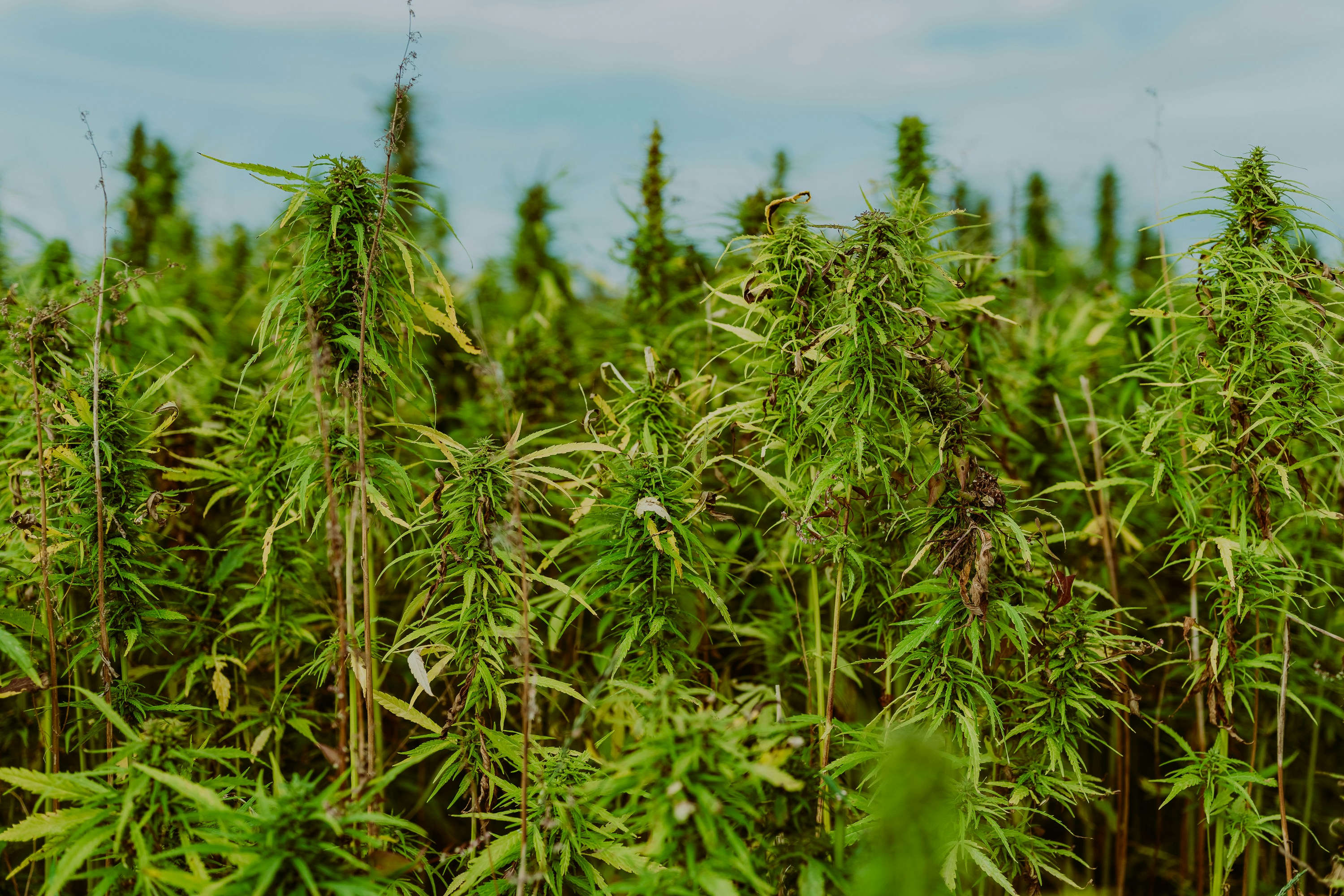
Industrial hemp cultivation is regulated at the federal level by Health Canada under the Cannabis Act and the Industrial Hemp Regulations. A license is required to cultivate or trade in hemp. In Quebec, this federal framework also applies, and activities must also comply with relevant provincial rules, particularly those related to agricultural production and, in the case of food processing, health requirements under the responsibility of the MAPAQ.
Hemp has many agronomic characteristics that make it a high value-added crop.
Its growth cycle lasts approximately 120 to 150 days until maturity, reaching a height of up to 3 meters. At peak growth, it can grow at a rate of approximately 7.5 cm per day. By comparison, wheat grows at a rate of around 0.35 to 0.60 cm per day. Thanks to its dense and rapid growth, hemp effectively competes with weeds, which can reduce the need for herbicides. It can also encourage the presence of beneficial insects (such as ground beetles and certain spiders), which are useful in agroecology. From an environmental perspective, it is also an excellent CO2 collector and store thanks to photosynthesis. According to calculations by the European Industrial Hemp Association (EIHA), the plant could absorb up to 13 tons of CO2 per hectare harvested (by comparison, one hectare of forest absorbs 15 tons of CO2). Its deep, taproot and fasciculated root system contributes to better tolerance to drought and explains why hemp does not require systematic irrigation.
Hemp is also of interest for phytoremediation. Several studies show that it can absorb certain heavy metals, and recent work shows that it can absorb certain PFAS. This potential opens the door to its cultivation on land that is less suitable for other crops, with the aim of contributing, in the long term, to soil regeneration. During its growth, its nitrogen requirements are moderate (around 100 units per hectare, which is on average half that of rapeseed and wheat). After harvesting, some of the nitrogen can also be returned to the soil through the decomposition of crop residues. By helping to improve soil health, hemp fits well into crop rotation. Some studies show that wheat sown after hemp can yield higher returns, sometimes in the order of 10 to 20% depending on conditions.
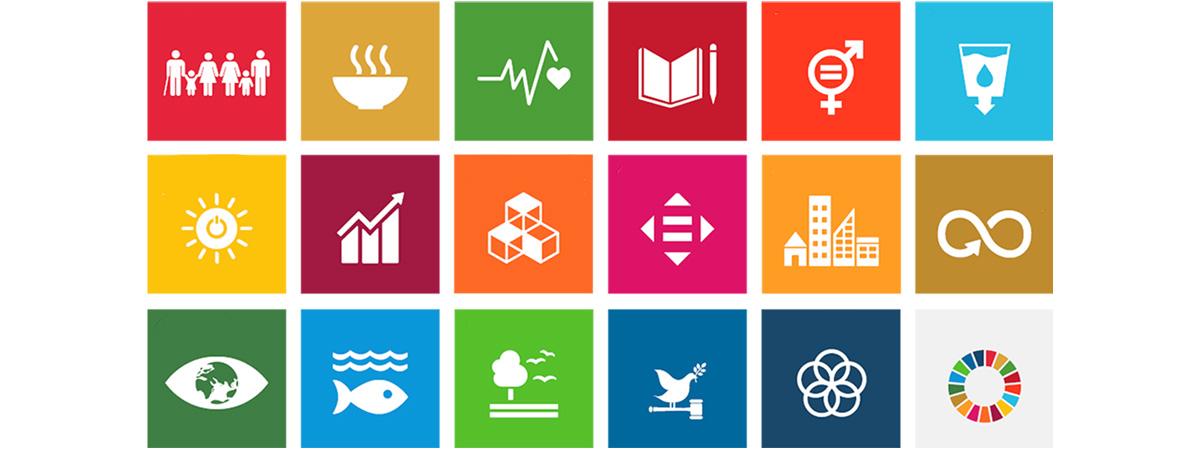
Hemp cultivation is therefore resolutely environmentally friendly and contributes to 10 of the 17 sustainable development goals set by the UN, including those related to carbon capture, the economy, water quality, and respect for biodiversity.
Once harvested, the plant's biomass can be fully utilized to create a wide variety of products. The primary material is the seeds, also known as hemp seeds, which account for about 10% of the plant's total weight. These seeds are mainly used for human consumption, either whole or in the form of oil, as they offer exceptional nutritional benefits being rich in protein, fiber, and vitamins B and E. They can also be used in the cosmetics industry and for animal feed, particularly for poultry and fish farming.
The stalk, also known as straw, provides two major raw materials: hemp shives and fiber. Hemp shives account for approximately 45% of the plant's weight and can be used to produce hemp concrete, animal bedding, or horticultural mulch. It can also be incorporated into polymers to create lightweight, high-performance bio-based materials, offering a more sustainable alternative to certain conventional plastics. Our member, Innofibre, has conducted studies to examine the economic potential of developing this type of product in Quebec.
The fiber, meanwhile, accounts for about 28% of the plant's total weight and has many uses: building insulation, plastics (particularly for certain automotive parts), textiles, geotextiles, and the paper industry.
When straw is defibered, hemp dust is generated, which can also be used as an energy resource. In particular, it can be used as a substrate in methanization to produce biogas, or it can be burned to produce heat—and, depending on the facilities, also contribute to electricity production.
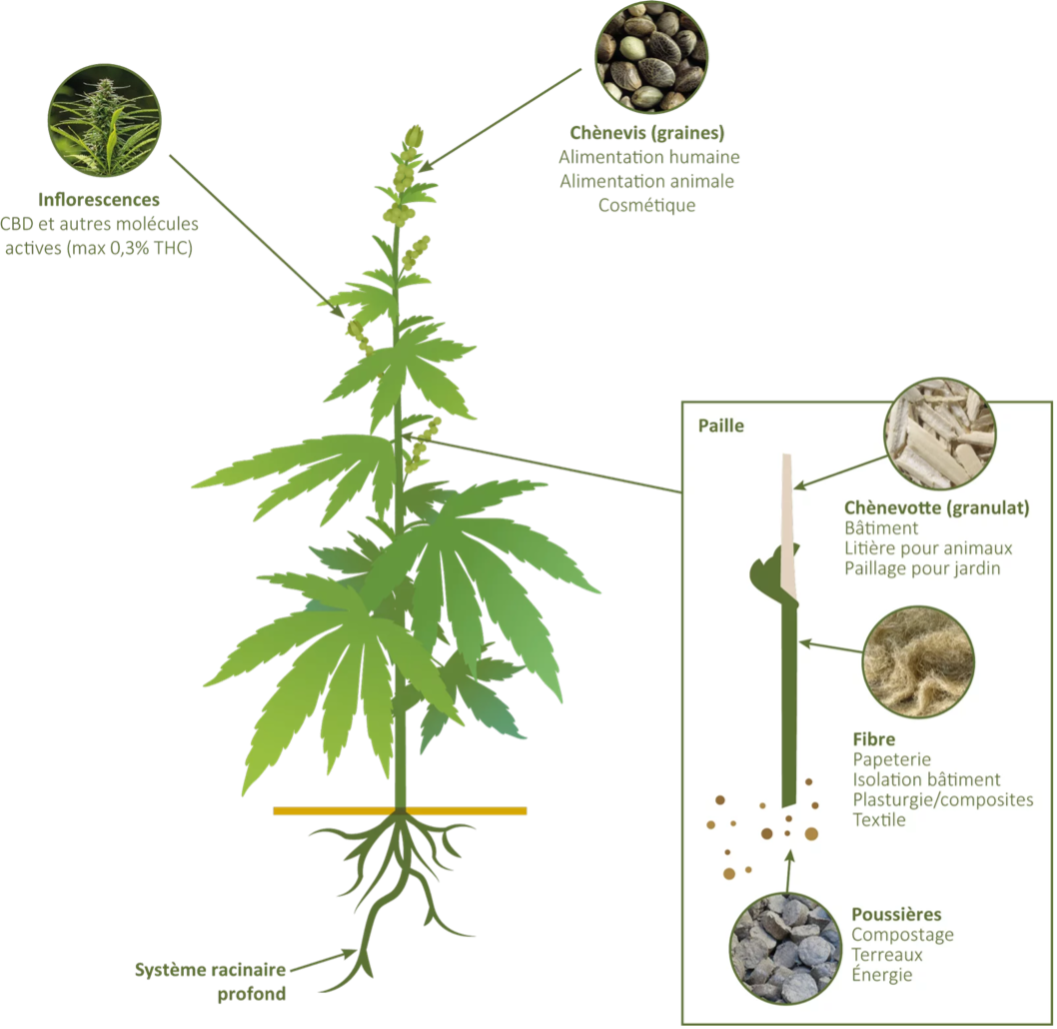
Source: European Hemp Cluster
Hemp fits perfectly into the bioeconomy model: it relies on the efficient use of resources and energy, while allowing almost every part of the plant to be used. However, like cannabis, it is sometimes held back by persistent stigma linked to its botanical family. Once we look beyond the prejudices, we discover a simple reality: behind the myths lies a useful, versatile plant with a promising future.
In Quebec, hemp is opening the door to a new supply and processing chain. By developing harvesting, sorting, defibration, and finished product manufacturing, we are creating value here, stimulating the local economy, and accelerating innovation in key sectors such as materials, agri-food, and the bioeconomy.
In the fields, it also represents a path to agricultural diversification. It can help stabilize incomes by opening up new markets, while integrating into crop rotations that promote healthier soils and more sustainable agricultural practices—an important lever for the sustainability of our farms and regions. And in a context where contaminated soil is a growing issue, hemp is also attracting interest for phytoremediation: a promising avenue for contributing to the remediation of certain sites while adding value to the biomass produced.
Finally, for the construction industry, hemp offers cutting-edge eco-friendly solutions, particularly through insulation, panels, and hempcrete, which are recognized for their performance and durability properties. Beyond the advantages associated with the plant itself, these materials also offer benefits that are sought after for the comfort and health of buildings: they emit no (or very little) VOCs depending on the formulation, help regulate humidity, provide good thermal inertia, and have interesting fire behavior when used according to best practices. The industry therefore has the potential to reduce the sector's environmental footprint while developing local options that are better able to meet the climate challenges of tomorrow.
AQIC acts as a gathering point and organizing force for the hemp industry in Quebec. We bring stakeholders together and work to create winning conditions to accelerate the development of production, processing, and market opportunities—for the benefit of our regions.
Our objectives:
Are you a producer, processor, or partner in the industry? Join the AQIC to accelerate the development of hemp in Quebec.
Whether you have a minute, an hour or more to spare, one of these 6 actions will allow you to take advantage of exclusive benefits and help the AQIC!

Subscribe to the AQIC newsletter
Follow the AQIC on social media and interact with the posts

Become a corporate member
Become an individual member

Make a donation
Get involved on an official AQIC committee

Chargement en cours...

